Writing in a post-truth world
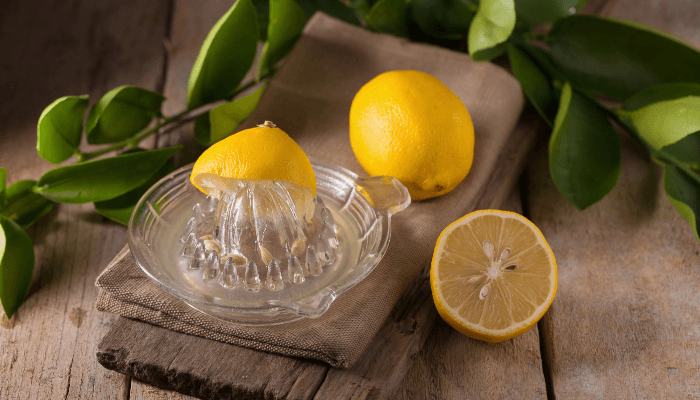
When I was growing up, before AI, social media, the Internet, before even computers, my mother used to refer to “the lemon pip in the jam”.
As jam makers will know, jam generally doesn’t contain lemons (unless you’re making marmalade – a quite different endeavour). And you certainly wouldn’t want pips in your jellies and compotes. The idea is to create something fruity and sweet, with just the right glisten and soft, spreadable consistency. A “thing of beauty and delight” or “das ist ein gedicht” (“this is a poem” in her native German) – as my mother would also say – her highest compliments.
But a jam recipe does sometimes ask for lemon juice as a way of adding pectin, the natural gelling agent in fruit, and a pip does sometimes sneak in.
However, far from criticism, pointing out the lemon pip in the jam, this too was a compliment. My mother applauded these small imperfections as proof that a dish, an artwork, a piece of writing or music was real – human, natural, authentic in other words.
Furthermore, she would teach, it is the small imperfections that surprise us, and this can be a delight. Imperfections, deviations, the unexpected, delight both in themselves and by setting off the rest to shine more brightly in contrast.
This delight of the unexpected and the imperfect is another element of everyday spirituality. The pleasure that these small reminders of the real – not huge enough to shock, but significant enough to startle – stop us in our tracks. They awaken us to the present moment, inviting us to reflect and wonder beyond the somnolence of our daily tramlines. In this way they remind us that the world around us is full of beauty, of small instances of the sacred.
These moments can nourish our soul in a world that feels so ironed flat, so factory-farmed, or so complex or nefarious as to damn the spirit entirely.
A meander: some reflections on AI
My mother’s phrase has been following me around lately. Back in the Spring I watched Carole Cadwalladr’s powerful TED talk This is What a Digital Coup Looks Like (April 2025). It’s brave and shocking. She describes what she calls the ‘broligarchy’, the alliance of oligarchs and tech-bros who are using digital technology and social platforms to amass unprecedented geopolitical power, dismantling democracy, and enabling authoritarian control across the world.
Key members of this ‘broligarchy’ are the ‘bros’ developing the Large Language Models (LLMs): ChatGPT and others. While AI advocates remind us of its amazing data crunching powers and its contribution to science and medicine for example, LLMs are currently its celebrity frontrunners, attracting billions of dollars of investment and a great deal of public commentary, critique and angst. Showing onscreen a “Ted talk written by ChatGPT in the style of Carole Cadwalladr”, she comments “ChatGPT has been trained on my IP, my labour, my personal data… and I do not consent”
This piece was not written by ChatGPT. It feels necessary to say this now and from now on. (A Japanese novel, 5% of which was written by ChatGPT, has just won a prestigious literary prize – further fuelling debate in the world – and war – of words).
This essay has a lemon pip at its heart. Yes, my IP, my labour, but also: my responsibility. As a human being I take responsibility for my words, the thinking I choose to build, for my turns of phrase, but also for my meanderings, contradictions, and my mistakes. This is not special pleading. The non-sequiturs or clumsy turns of phrase are “the lemon pip in the jam”: the clunky bits are what makes this real; the mistakes are what keep us human. ChatGPT would have smoothed them out and slicked them up.
The pillaging of other’s skill and creativity along with the lack of accountability lie at the heart of many people’s distress, and in the darker shadows of collective fears lurks the spectre of the digital replacing the human.
The Luddites who fought against the automation of the textile industry in the early 1800s are often cited as a proxy for anti-progress. They weren’t. They fought for dignity.
Textile worker plus loom was where lemon pips occurred – the blips, touches and detours that speak of the human hand. Hard as it was, work at this rhythm allowed for a sense of pride in the excellence of the product. Their contribution to their world gave them a sense of identity and validity: their life mattered.
The Luddites knew that destitution would follow the introduction of machines, but we can also recognise it as a tragedy of the human spirit. The casual throwing away of a whole way of life that was human scale also extinguishes the human spirit. This rupture is ultimately corrosive. To contribute – to our tribe, family, community, workplace, society – and, if our ambition is broad enough – to making our world a bit better for all life, is in our DNA. It is our birthright.
AI is a con, states ex-Stanford and Berkeley professor Emily Bender, an expert in how computers model human language [1]. Not only because it will replace the jobs of so many, stripping them of the dignity of contribution. But fundamentally because it risks stripping out meaning from human life. LLMs can only put together the words inputted by technicians “…according to probabilistic information about how they combine, but without any reference to meaning” [2]. All LLM programmes are determined by the linguistic, educational, and moral, limitations of the inputters – and the ambitions of their bosses.
How captivated we are by this latest innovation of modern life! Disgusted, afraid, angry maybe, but also entranced. This is a trance fostered through decades of carefully constructed and cumulative addictions: to consuming stuff and now experiences, to being always entertained, to the 24/7 dopamine hits of social media, to the nostalgic comfort of Big Power to think for us, and now to the marvelous magic trick of LLMs deciding what we say and how we say it.
So maybe the lemon pip in the jam is one small contribution to an emergent awakening and resistence to the trance of modern life?
Some thoughts on Post-Truth
“Look after facts – you’ll miss them when they’re gone” [3]
AI is not just about messing with words to make them sound ‘better’ or crunching data more, better, faster. We must look at how these powerful new tools are being used. When you add into the mix the weaponisation of social media in pursuit of autocratic power AI becomes a principal handmaiden to our new Post-Truth world.
While it goes against my grain to advocate this, I think we are right to be worried. When facts and policy are replaced with ideology and propaganda we have an inevitable slide from autocracy towards totalitarianism. This is cemented with every unchallenged lie, every disregard for the facts, every demolishing of democratic laws, every turning away from wrongdoing. Nuance and complexity are banished, slogans and click-bait rule. Crucially, our capacity to tell right from wrong is diminished.
In her biography of Hannah Arendt, Lyndsey Stonebridge, writing of the impact of totalitarianism as instituted by the Nazi regime, voices the question that preoccupied Arendt from 1945 on:
“If we can no longer tell what is real from what is fake, how can we judge what is right? How can you ground a new political reality when common sense itself has been blitzed?” [4]
How indeed? By way of current context some data:
Between 2016 and 2021, the number of countries moving towards authoritarianism was more than double the number moving towards democracy [5]
“2021 saw six coups, a sharp break from an average 1.2 coups per year since 2000. Polarization is increasing to toxic levels, as respect for legitimate opposition and pluralism declines, while autocratic leaders are increasingly using misinformation, repression of civil society and media censorship to empower their agendas.” [6] (United Nations United Nations Development Programme)
I am of the generation brought up on George Orwell’s 1984 and by a mother who escaped from Nazi Germany to Britain as a refugee on a kindertransport in April 1939 just before the start of World War II. So no surprise that I agree with Timothy Snyder that “post-truth is pre-fascism.” [7]
Stonebridge comments on the parallels with today, citing Arendt:
“Nothing which was being done, no matter how stupid, no matter how many people knew and foretold the consequences, could be undone or prevented.” [8]
So can nothing be done? Is the slide to moral nihilism inevitable? Or is Arendt’s verdict unduly pessimistic?
I believe (I need to for my sanity) that while, as Nate Hagens puts it, the ‘economic superorganism’ that we super-primates have inadvertently created [9] cannot be stopped, we can work together to allow a different way of living to emerge. It starts with shifting our lens.
Spiritual Emergency
The cocktail of our addiction to more, the hypnotising rise of AI, polarised politics and the social media escalation of post-truth ideologies, is certainly a moral catastrophe. But if we shift the lens we can view it also as a spiritual emergency.
AI threatens us not just because it can do so many of our jobs faster and more accurately, but because by asset-stripping us of the slow process of apprenticeship – refining our skill, creatively adapting our expertise to bring our own voice to our work, engaging with others in our endeavours, and contributing something worthwhile to society – AI sucks the spirit from our time on Earth. It is a Faustian pact: we have guzzled the Kool-Aid in return for our soul.
Can we awaken from the trance? Reminding ourselves what it means to be human in today’s world is an urgent matter. Conceiving of today’s enmeshed crises as having at their core a psycho-spiritual crisis is not to invoke the gods or retreat to a monastery, but rather to recognise that we have agency. A good example is the stand taken by the Quakers against war [10].
Seen this way, another response to the rise of the emolliant digital monsters is to understand this as a spiritual call to action. To be not-perfect, not-slick, to think up one’s own way of speaking, as Timothy Snyder urges in On Tyranny [11] is an act of resistance against autocracy, Post-Truth, totalitarianism – against the soul-suckers! It is a stand for bringing the spirit – the vital flame of life – back into our everyday lives, our work, our time on this planet.
Thinking for oneself, taking time to develop our skills and contribution, taking delight in the lemon pips in the jam – all this is recognition of the sacred, of the extraordinary gift of our time on this Earth. This is taking a stand for the soul. This is everyday spirituality.
[1] Bender, E & Hanna, A (2025) The AI Con: how to fight big tech’s hype and create the future we want. Bodley Head
[2] Hammond G (2025) Lunch with the FT Emily Bender. The Financial Times 21/22 June 2025
[3] Cadwalladr C (2025) TED talk. This is What a Digital Coup Looks like (at 11.03 mins)
[4] Stonebridge L (2025) We are Free to Change the World: Hannah Arendt’s Lessons in Love and Disobedience. Vintage. (p.147)
[5] The Global State of Democracy 2022. International Institute for Democracy and Electoral Assistance. (Accessed 19.04.2025)
[6] UNDP Future Developments Spotlight: When Democracies Autocratise. https://www.undp.org/future-development/signals-spotlight-2023/when-democracies-autocratise. (Accessed 19.04.2025) The UNDP is the UN’s lead agency on international development, operating in 170 countries to eradicate poverty, promote sustainable development, and support countries in implementing policies for economic growth, governance, climate action, and social inclusion.
[7] Snyder T (2016) On Tyranny (p71)
[8] Stonebridge L (2025) We are Free to Change the World: Hannah Arendt’s Lessons in Love and Disobedience. Vintage. (p.143)
[9] Hagens N (2025) Frankly on The Great Simplification: https://www.thegreatsimplification.com/podcast/frankly. Accessed 28.07.2025
[10] See The Quaker Peace Testimony. https://quaker.org/peace-and-nonviolence/. Accessed 28.07.2025
[11] Snyder T (2016) On Tyranny (p.59).

